Showing posts with label Charlotte Mason. Show all posts

Monday, April 02, 2007

Year 2 Term 1: Literature Exam

Grace had her first oral exam today. It was also MY first day of giving exams. Today is our official Exam Week for Ambleside Year 2, 1st Term. Despite our many firsts, Grace showed no fear whatsoever with the idea that she would be orally tested on the material she had covered over the course of our last term. I was the one who was nervous for her! This was my first opportunity to see how reading literature slowly over a long period of time assisted in her memory retention.

At the age of seven, in Charlotte Mason fashion, Grace is tested orally in a manner that seeks to give her a way to provide as much information as she can recall about subject matter that she has covered. This tends to be a stark contrast to exams today, especially at her age. There is no guess work. No multiple choice. Just tell me what you know. Overall, I am very happy with her narrations, considering this was the first time she had been asked to recall from months back. I wasn't sure what to expect. Because of my own doubting demons, I tended to go a little easy on this round, and after today, feel comfortable heightening the bar as the week progresses. Grace quickly declared that she loved exam week, since once the oral exam was over, she could play on the farm for the rest of the day!

Today Grace's exam questions revolved around our Literature reading for the term, which included chapters 1-6 in The Wind in The Willows, two Shakespeare plays, and a number of chapters from Parables of Nature. Below are the exam questions and word for word answers as dictated.

The Wind in The Willows:

Name the four main characters in The Wind in The Willows and tell me about each character.

There is Rat. He watches Toad like Badger told him. Ratty found mole a friend. And there is Mr. Badger. Mr. Badger showed Rat and Mole his gigantic place that came under water that man built and he also got mad at Rat for leaving Toad. There is Toad, and he's all about the motor car. He loves motor cars, and he climbed out the window and he got arrested and put in a deep dark dungeon with a crooked key. Mole...he went in the carriage with Rat and Toad and he was cleaning his house with whitewash, and he went on a walk with Mr. Badger.

What has been your most favorite part of The Wind in The Willows so far and why?

When Toad climbed out the window. He was pretending to be ill and he was like "I have my own plans", and he climbed out the window.

What do you think the story of The Wind in The Willows is about up to this point?

It is about animals becoming friends and about the trees blowing with wind, and about seasons, like change. About coming home, and going on adventures.


Shakespeare:

Choose a play from Shakespeare that we did this term and tell me the story line.

Play selected is Romeo and Juliet.
Romeo sneaks into the Capulet's party with a mask on pretending to be a Capulet. And there was a guy who recognized his voice and he was like "You dare sneak into our party!". And he was like, "You are going to be sacrificed for your punishment." So Romeo ran away from that guy and he met a beautiful woman named Juliet. And he said, "Are you dancing?" And she said, "Of course I am young gentleman." And so he was like, "Who are you a Montague or a Capulet?". "A Capulet", she said. And she was like, "Who are you, a Capulet or a Montague?" And she got so startled that she went to her room that night.

I think that Lord Capulet banished Romeo from Verona. And the Friar kept sending notes of how he was and he was in need of food. And the Friar came and told that they had a plan for Juliet, but he did not tell Romeo what the plan was and so the Friar went back, but the bad news came faster than the good news. When Romeo heard that Juliet was dead (but she really wasn't) he was so sad he really cried. And so when the Friar got there Romeo was dead. And so when the Friar told him that Juliet was alive she just drank a potion, Romeo didn't believe him.

So he came back to to Verona to die with his fair lady. And when he got there Count Paris was there. They had a battle and so they fought, and fought and fought, until Romeo killed Count Paris. When he turned on the light, he saw it was Count Paris. And it was nearly time for Juliet to wake up. And he got to the tomb where Juliet was laying asleep, and he stabbed himself and fell dying on the ground. And then when Juliet woke up and the Friar came back they both saw Count Paris and Romeo were dead and so Juliet now knowing Romeo was dead took a knife and stabbed herself in the belly and died next to them.

And so Lord Capulet and Lord Montague became friends. After all they weren't friends before and now they say they are brothers.


Parables of Nature:

What is a zoophyte?
A plant that lives in the sea that is an animal.

What is a Will 'o The Wisp?

It is like a glowing ball that keeps people from danger like a bog.

Thursday, August 24, 2006

A Road Trip Around Australia

Last term it was my goal to have the children become very familiar with the continents. I considered moving on to learning the states, but reconsidered, and thought we'd spend a few weeks delving deeper into each continent's landmarks, cultures, fauna and flora. This month we have focused on Australia.

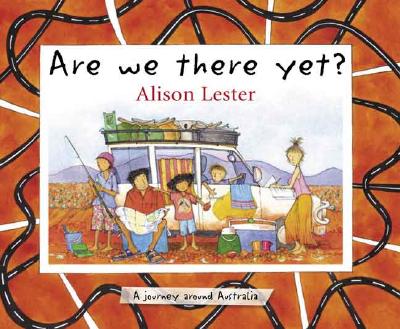
The library has a plethora of lackluster books on the continent - nothing remotely with a Charlotte Mason living book feel. I selected a few of the sterile books, but also took the time to check out "Are We There Yet?" by Alison Lester. The other books were quickly tossed aside once we started reading this book. The book details a road trip around the perimeter of Australia from the view point of Grace, the youngest in the family. The illustrations are colorful, and bits of humor are thrown in as you explore notable landmarks throughout Australia. Even my four year old fidget-boy stayed engaged.

Naturally, tonight I was back online to see if Ms. Lester could save the day again as we move on to the next continent. The plan was to head to Asia, but it looks like we'll be taking a detour and heading to Europe since she has also written a similar children's book about Spain.

Friday, January 13, 2006

What Happens When The Teacher Gets Sick?

Today I was less then capable of being an effective teacher. The teacher has managed to get sick and lose her voice the first week back in school. With the heavy Charlotte Mason emphasis on reading and living books, it is especially difficult to carry out my duties. But it was fun for the kids since they got to swarm around Dad as he read the material for Friday, and Grace was able to show off her narration skills she's developed so well.

I tried my best to rearrange our school day schedule and get the kids to enjoy a little of the good weather in the morning before the storms rolled in by noon. It was short lived, but I was pretty impressed with their scavenger skills. Laid up on the couch, I told them to go outside and bring me back 5 interesting things. Apparently that was too broad, as they were back in 30 seconds, saying they couldn't find anything interesting. So, putting on my CM hat and keeping our current rodent nature study in mind, I asked them to find the remainder of a nutshell that had been eaten by a squirrel. They bolted out the door all excited, and I actually scolded myself for giving them such a hard task (fully thinking they wouldn't find anything). To my astonishment, Grace and Jack were back in 5 minutes with their find: two acorn caps still held together by a small twig - both caps showing clear evidence of being broken on one side by the teeth of a squirrel who extracted the acorn. Unbelievable...they actually found it.

The second request was for a stick that had something interesting. They came back in another five minutes and said they had found a tree that was brown on one side and had green on the other side, but that they couldn't bring that in.

The third (and last) request was cruel. I told them to find a coccoon. I was tired and was trying to have them get a little more air time then 5 minutes here and there. That didn't happen.

So the children huddled up in the green room with me and we watched a Netflix movie called Winged Migration - a full hour of footage with little narration about the migration of various bird species. When the rain hit in the afternoon we cracked open the books.

Wednesday, November 09, 2005

Trading Hymns For Prayers

Ambleside Online includes the use of learning hymns and folk songs in their curriculum, which falls right in line with Charlotte Mason. This is the only part of the curriculum that causes a struggle within me.

I have a strong appreciation for many of the classics, but the thought of teaching my children hymns, admittedly has been one I have avoided. It just sounds boring (throw tomatoes now). If you catch me singing praises in the car, it is to bands like Audio Adrenaline, Jars of Clay, or Swiftfoot. I'm sure Ms. Mason would be rolling over in her grave. I'm guessing I'm not your typical Ambleside mother.

I do have an alternative that I think is an equivalent to memorizing hymns, and that is memorizing prayers. Hymns and prayers are very much similar in their intent and posture. One of the legacies I want to leave to my children is a plethora of prayers. Prayers said together as a family, like hymns, can bring a flood of childhood memories back to the adult mind. The act of passing prayers on through generation after generation, is important to me.

Starting last January we began memorizing a new prayer for each term. These prayers are said as a blessing over our meals, and the children relish picking out the prayer to be said. Here is what we have learned so far:

Robert Herrick's - A Child's Grace
Here a little child I stand,
Heaving up my either hand.
Cold as paddocks though they be,
Now I lift my hands to thee,
For a benison to fall,
On our meal and on us all.


Paddocks are another word for frogs, and a Benison is a blessing.

This next prayer is one carried down from Ken's German paternal grandparents. It is a combination of two Lutheran prayers and was said a mealtime.

All eyes wait upon Thee O Lord,
And Thou givest them their meat in due season.
Thou openest thine hand,
And satisfiest the desires of every living thing.
O Lord God, heavenly Father
Bless unto us these Thy gifts
Which of Thy tenderkindness
Thou as bestowth upon us.
Through the merits of Jesus Christ,
Our Lord and Savior.
Ever one God,
World without end. Amen

Our last prayer is actually a portion of a song from Nicole Nordeman appropriately called "Gratitude".

Daily bread, give us daily bread
Bless our bodies, keep our children fed
Fill our cups, then fill them up again tonight
Wrap us up and warm us through
Tucked away beneath our sturdy roofs
Let us slumber safe from danger's view this time
Or maybe not, not today
Maybe You'll provide in other ways
And if that's the case . . .

We'll give thanks to You
With gratitude
A lesson learned to hunger after You
That a starry sky offers a better view if no roof is overhead
And if we never taste that bread.

I have been in search of more prayers that we could learn for next year's terms. If any of you have ones that are near and dear to your heart, I would love to have you include them in the comments section.

Sunday, August 07, 2005

An Educational Manifesto - Part II

Excerpted from Charlotte Mason's Vol. 3 "School Education: Developing A Curriculum"
Originally published in 1925


Children can be most fitly educated on Things and Books.

Things, e.g.: -

i. Natural obstacles for physical contention, climbing, swimming, walking, etc.
ii. Material to work in -- wood, leather, clay, etc.
iii. Natural objects in situ -- birds, plants, streams, stones, etc.
iv. Objects of art.
v. Scientific apparatus, etc.

The value of this education by Things is receiving wide recognition, but intellectual education to be derived from Books is still for the most part to seek.

Every scholar of six years old and upwards should study with 'delight' his own, living, books on every subject in a pretty wide curriculum. Children between six and eight must for the most part have their books read to them.

This plan has been tried with happy results for the last twelve years in many home schoolrooms, and some other schools.

By means of the free use of books the mechanical difficulties of education -- reading, spelling, composition, etc -- disappear, and studies prove themselves to be 'for delight, for ornament, and for ability.'

There is reason to believe that these principles are workable in all schools, Elementary and Secondary; that they tend in the working to simpflication, economy, and discipline.

Saturday, August 06, 2005

An Educational Manifesto - Part I

Excerpted from Charlotte Mason's Vol. 3 "School Education: Developing A Curriculum"
Originally published in 1925

"Studies serve for Delight, for Ornament, and for Ability"

Every child has a right of entry to several fields of knowledge.
Every normal child has an appetite for such knowledge.
This appetite or desire for knowledge is a sufficient stimulus for all school work, if the knowledge be fitly given.

There are four means of destroying the desire for knowledge:

(a) Too many oral lesons, which offer knowledge in a diluted form, and do not leave the child free to deal with it.
(b) Lectures, for which the teacher collects, arranges and illustrates matter from varous sources; these often offer knowledge in too condensed and ready prepared a form.
(c) Text-books compressed and re-compressed from the big book of the big man.
(d) The use of emulation and ambition as incentives to learning in place of the adequate desire for, and delight in knowledge.